
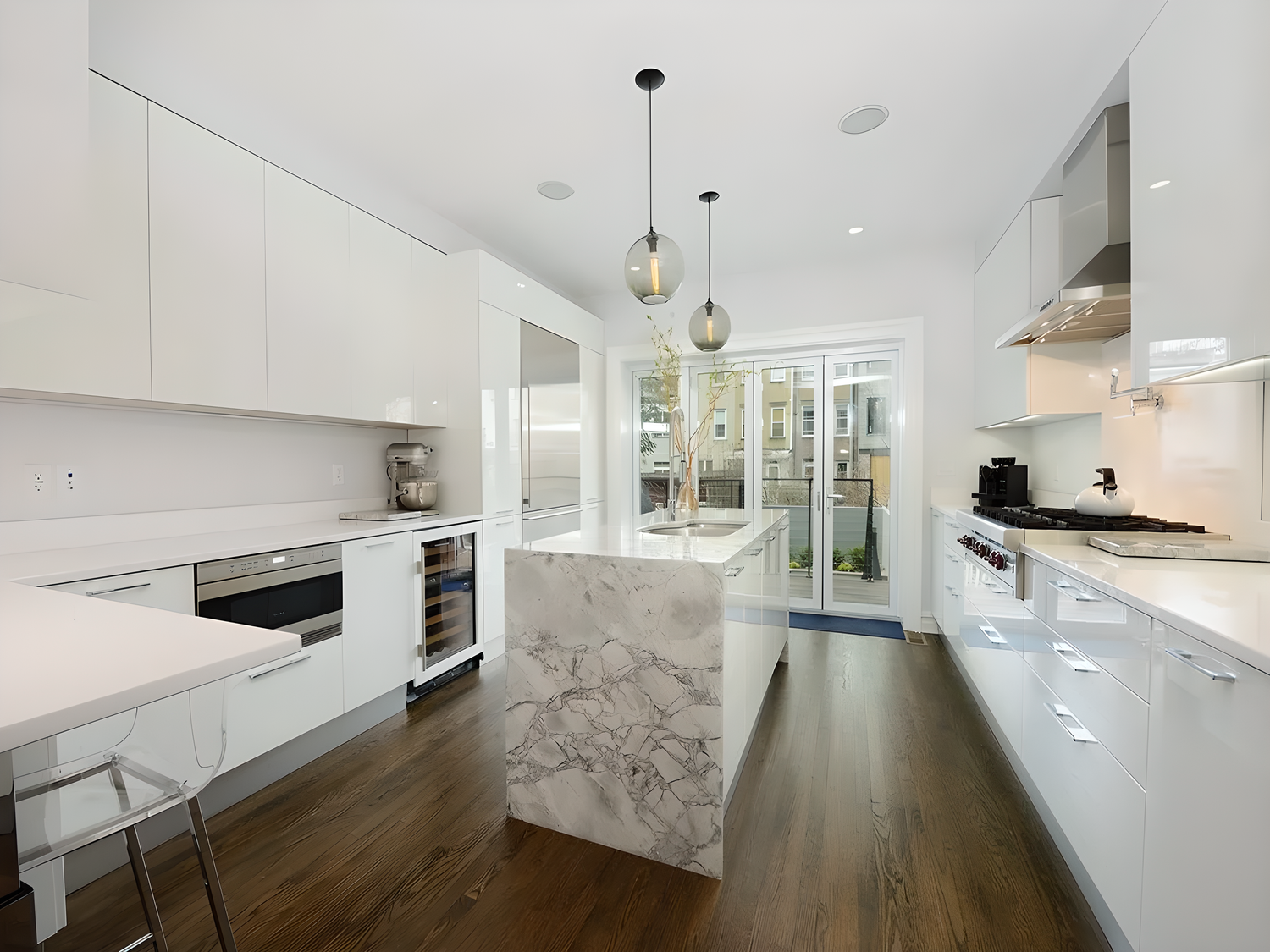
If you can get the keys before you move in, a kitchen renovation is often easier to coordinate than if a household is already living around the work. The real question is not whether the project can be done, but whether your possession timing, storage needs, and move-in plans give HKB enough access to handle the kitchen in a practical sequence.
Before you think about finishes or fixtures, compare the renovation against the move itself. In some homes, an empty kitchen means simpler protection of nearby rooms, easier deliveries, and less interruption to the rest of the house. In others, the move date, temporary storage, or building access becomes the limiting factor. HKB handles substantial kitchen remodeling, including projects that may involve planning, permits or inspections when needed, and condo or co-op building requirements in Hoboken, Jersey City, Union City, nearby North Jersey, and Manhattan. See the core service on kitchen remodeling and the local area page for Hoboken.
The main tradeoff: access before occupancy vs. working around a household
The biggest advantage of renovating before move-in is straightforward access. Trades can move through the space more easily, materials can be staged without competing with daily life, and the kitchen can be addressed as part of the handoff into the home. That can matter when the scope touches layout, storage, finishes, or nearby rooms that are easier to coordinate while the house is empty.
The downside is that pre-occupancy renovation depends on a clean chain of possession. You need enough time between closing, key transfer, and your own move to make the scope workable. If that window is tight, the project may need to be planned for a later start or a different sequence.
A simple comparison helps:
- Before move-in: better access, less disruption, easier staging of materials
- After move-in: more flexibility if possession is delayed, but the household must live around the work
The better choice is the one that matches your actual handoff, not the one that sounds easier in theory.
Possession and building access are separate questions
A common mistake is treating “we own the home” and “the project can begin” as the same thing. They are not. The renovation can only proceed when the property is available for the scope you want, and any building review or access rules have to line up with that timing as well.
For a new-home kitchen, ask these questions early:
- When do you actually control the space?
- Will the kitchen be fully empty, partially occupied, or still in transition?
- Are there limits on delivery, elevator use, staging, or contractor access?
- Does the project need to be coordinated with other rooms before you move in?
Those answers shape the sequence before anyone talks about selections.
Plan storage and the move together
A pre-move renovation works best when storage is part of the plan. Cabinets, appliances, and finishing materials may arrive before the kitchen is ready for them. Your own belongings may also need a temporary home while work is underway.
That makes three decisions especially important:
- What needs to be stored off-site, and for how long?
- Which items should arrive only after the rough work is ready?
- What has to be unpacked immediately after the move, even if the kitchen is not finished yet?
If your move includes furniture, boxes, or other rooms that also need attention, the kitchen may belong in a broader move plan rather than being treated as an isolated project. For related planning on connected work, see buying a home that needs renovation: prepare the first scope.
Decide what must be settled before the first day on site
Before anyone can have a useful schedule conversation, a few choices should already be clear. You do not need every product selected, but you do need enough detail for the project to be shaped around the move.
Use this checklist:
- Possession date: when the home is actually available
- Move date: when you need the home to function
- Kitchen priority: layout change, storage, finishes, or a broader renovation
- Access constraints: building rules, parking, delivery, elevator, staging
- Temporary living plan: where meals and essentials will go during the transition
- Selection status: what is already chosen and what is still open
If those items are vague, any projected timing will be vague too.
What to send HKB for a useful first conversation
If you are considering a kitchen renovation before moving in, the most helpful inquiry is not just “Can you do it?” It is the full context around the handoff.
Send:
- the address or ZIP
- the kitchen scope you have in mind
- whether the home is vacant, occupied, or in transition
- your expected possession and move timing
- whether the building has access or approval steps
- any storage or delivery constraints
- your contact preference and best follow-up window
You can use the public contact form to share those details. The more complete the starting brief, the easier it is for Tony and HKB to judge whether the project can be planned around your move.
If you want the kitchen handled before you unpack the rest of the house, start with one question: does your possession window give the project enough access, or should the renovation be sequenced differently? That answer usually determines the rest.