
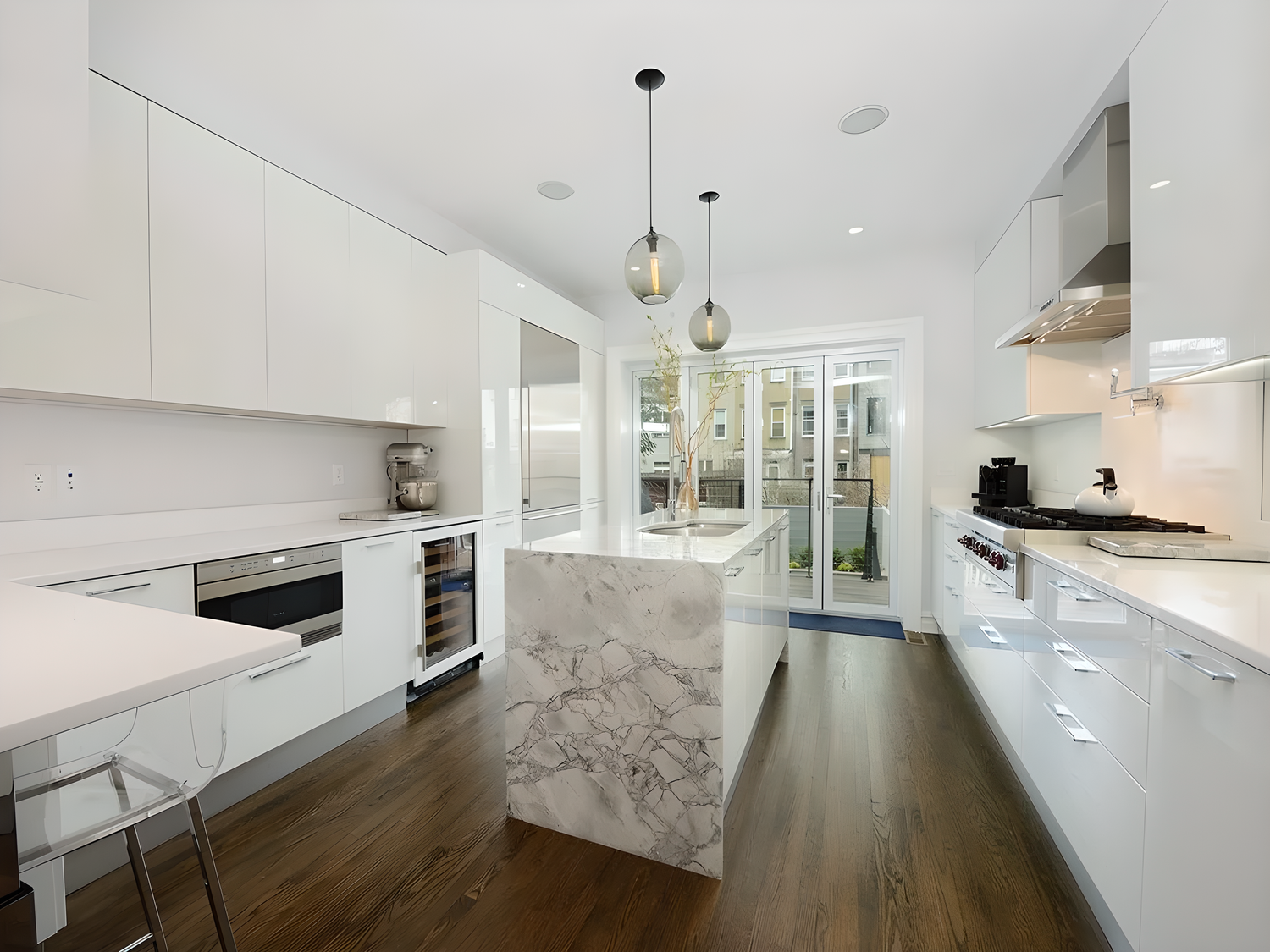
When you plan a full-home renovation, the right way to handle unknown conditions is not to guess a blanket contingency and hope it covers everything. It is to separate what you already know, what cannot yet be seen, what choices still affect the scope, and how those discoveries will be reviewed before work moves on. That keeps the project grounded in facts and gives HKB a clearer basis for planning, especially on larger interior renovations in Hoboken and nearby North Jersey homes.
If you are considering a project with HKB full-home renovations, this is the planning question to solve early: what has been confirmed, what remains inaccessible, and who will decide when new conditions appear?
Start with known facts, not assumptions
A useful renovation plan starts with the parts of the home and scope that are already known. That includes the rooms you are renovating, the visible finishes, the existing layout where relevant, and any limitations or preferences you already understand.
The tradeoff here is simple. A broader early scope gives a contractor more to evaluate, but a vague scope makes it harder to tell which unknowns are real and which are just unanswered questions. For a homeowner, the goal is not perfect certainty. It is enough clarity to avoid treating every possibility as if it will happen.
A good first conversation with HKB is more useful when you can separate:
- what is staying as-is
- what is definitely changing
- what is still undecided
- what has not been opened or verified yet
That last category matters most, because hidden areas are where true unknowns usually live.
Separate inaccessible areas from open decisions
Not every unknown condition has the same meaning for the project. Some parts are inaccessible because they are behind finished surfaces. Some are unknown because you have not yet chosen a product, layout, or room relationship. Those are very different planning issues.
Compare these two cases:
- An unopened area may reveal a condition that changes the work.
- A selection still under review may change the look or coordination, but not necessarily the underlying scope.
That distinction helps you avoid overreacting to every uncertainty. It also helps HKB tell you where the project needs flexibility and where it simply needs a decision.
For Hoboken homes and nearby apartments or multifamily projects, this separation is especially useful because access, building coordination, and room-by-room sequencing can affect when unknown conditions are discovered. If you want a local starting point, Hoboken service area coverage shows the general area HKB serves.
Decide how discoveries will be reviewed
The most important planning decision is not the contingency itself. It is the review process.
Before construction starts, agree on:
- who gets notified when a new condition is found
- what information HKB will provide before moving ahead
- whether work pauses until a decision is made
- which choices can be resolved quickly and which need homeowner review
This keeps the project from drifting into informal guesswork. It also prevents small discoveries from forcing larger decisions that were never discussed.
For example, if a condition is found in one room, the question is not just whether that room changes. It is whether the discovery affects the next room, the overall sequence, or a selection you had planned later. A clear review step helps separate those outcomes.
Keep contingency thinking tied to scope, not percentages
Many homeowners want a single percentage to cover the unexpected. That sounds tidy, but it can blur the real planning questions. A percentage does not tell you whether the concern is hidden conditions, changing selections, or a broader scope decision.
A better approach is to build the contingency conversation around the project itself:
- Are there unopened areas with uncertain conditions?
- Are there known constraints that may affect how the work proceeds?
- Are there still layout or finish choices that could shift coordination?
- Is the project being done while the home is occupied or partially occupied?
This makes your planning more useful than a one-line allowance. It also gives you a better way to compare proposals for a complex renovation, since each proposal can show what is known, what is assumed, and what remains to be reviewed.
If you are comparing project structure as well as uncertainty, this related guide may help: What plans and drawings help with a renovation estimate?.
Use a simple worksheet before you request a proposal
Before you ask HKB to price or review a full-home renovation, gather a short worksheet. You do not need a perfect package. You need enough structure to separate the facts from the open questions.
Planning worksheet
- Rooms included in this phase
- Items that will stay in place
- Areas not yet opened or fully visible
- Decisions still pending
- Questions you want reviewed before work advances
- Who should be contacted when a new condition is found
- Whether the project needs room-by-room approvals before moving on
This kind of worksheet is practical because it keeps the scope readable without pretending the unknowns are all the same. It also helps HKB understand where to focus in an initial consultation.
If you are ready to start that conversation, send the project details through contact HKB. Include the scope, ZIP code, what you can confirm today, what is still unknown, and how you want to be contacted.
For a full-home renovation, the most useful details are the ones that help HKB separate known facts from unresolved questions. Tell them what rooms are included, what has already been decided, what cannot yet be inspected, and what kind of review process you want if something unexpected comes up.