
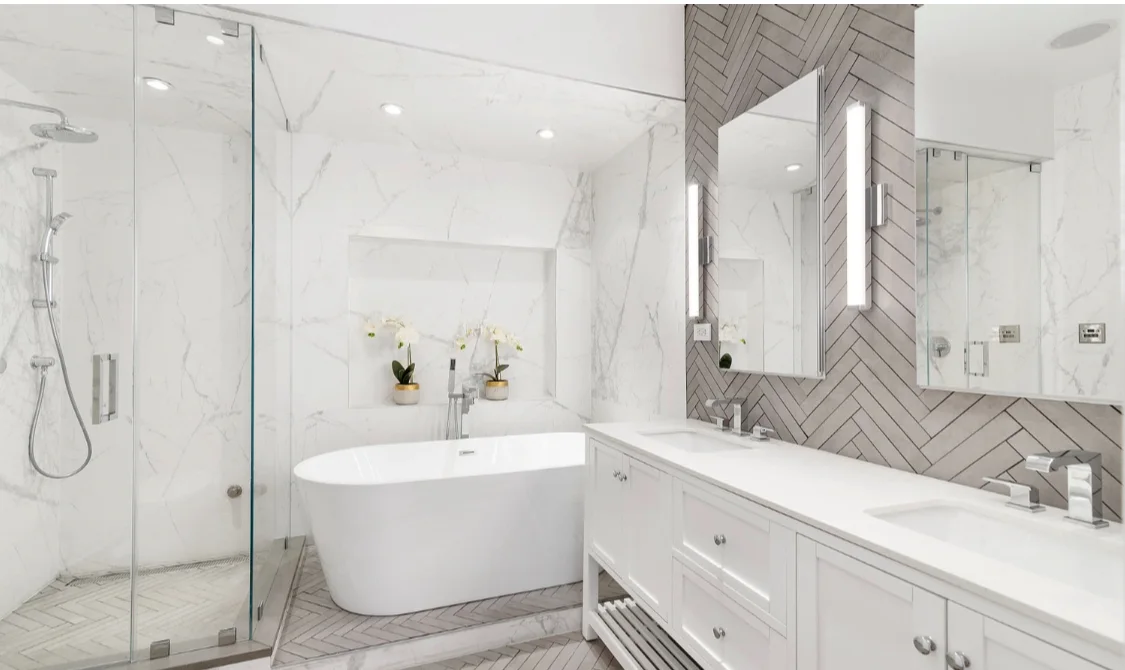
Choosing bathroom finishes is not just about style. The better question is: what will you be willing to clean, inspect, and eventually replace? A good bathroom remodel should fit the way you live now, not just how the room looks on installation day. That means comparing care instructions, grout and joint details, cleaning access, and how easy different parts will be to service later.
If you are planning a bathroom remodel with HKB, start with the maintenance burden of each finish, not the sample board. That is the cleanest way to avoid regret later.
Start with the surfaces you will touch most
Some finishes ask for more attention than others. Tile, stone, quartz, solid-surface panels, painted trim, glass, metal fixtures, and cabinet hardware all age differently in daily use. The right choice depends on how much upkeep you want to take on.
A useful comparison is between a tile shower and a large-panel shower wall system. Tile gives you more visual options and more opportunities to shape the room, but it also brings more grout lines and more places to think about cleaning. Larger panels usually mean fewer joints to maintain, but they reduce design flexibility and may limit the look you want.
That same tradeoff shows up at the vanity. A vanity with open shelving can feel lighter and more tailored, but it exposes towels, baskets, and clutter. Closed storage is easier to keep visually calm and typically simpler to tidy day to day.
Compare care instructions before you compare looks
Care instructions should be part of the selection conversation. Ask how each product is meant to be cleaned, what cleaners are acceptable, and what kinds of surfaces are easiest to scratch, dull, or stain. Products that look similar in a showroom can have very different maintenance demands once they are in your home.
A few planning decisions matter here:
- Decide whether you want a bathroom that can be cleaned quickly or one that supports a more detailed upkeep routine.
- Decide which surfaces should handle heavy daily use and which can be more decorative.
- Decide whether you are comfortable with finishes that may show water spots, soap residue, or fingerprints more readily.
Those choices help narrow the field before you get into color, pattern, or trim details.
Grout, joints, and edges change the maintenance load
In bathrooms, the details do a lot of work. Grout lines, transition strips, caulk joints, and edge trims all affect how the room feels and how much upkeep it may need. More small details can mean more visual texture, but also more places to clean and maintain.
If easy upkeep matters to you, consider:
- Larger tile formats in areas where you want fewer grout lines
- Layouts that limit awkward little cuts and tight edge conditions
- Finish combinations that reduce the number of material transitions
- Simple profiles around mirrors, niches, and vanity edges
This is also where the room’s overall design and the finish selection need to stay aligned. A bathroom with many separate materials can look custom, but it often needs more attention to keep all the edges and joints looking orderly.
For more on how finishes work together, see Choose bathroom tile beyond the sample board.
Plan for cleaning access, not just cleaning products
It is easier to keep a bathroom in good shape when the room is laid out with access in mind. Think about where dust, moisture, and residue tend to gather. Think about whether you can reach around the toilet, under the vanity, behind the faucet, and inside shower edges without making the room awkward to use.
Practical decisions worth making early include:
- Whether the vanity has enough clearance for daily cleaning around the base
- Whether shower glass hardware leaves enough room to wipe surfaces comfortably
- Whether mirrors, sconces, and shelving make the wall easy or difficult to dust
- Whether the room has finishes that tolerate frequent wiping
If you want a bathroom that is easier to keep up, simplicity in shape often matters as much as the product itself.
Think ahead to replacement and repair access
No finish lasts forever, and a smart renovation makes future replacement less disruptive. Ask how each item would be serviced if it needs repair, replacement, or adjustment later. That includes the vanity, faucet, shower glass, mirrors, lighting, and trim pieces.
This is not about predicting problems. It is about avoiding choices that make ordinary replacement more complicated than it needs to be. For example, a beautiful detail can be a poor choice if it blocks access to a part that may need attention later. The goal is not perfect permanence. The goal is a bathroom that remains workable over time.
Use a maintenance worksheet before you order
Before you commit, compare each finish with this quick worksheet:
- How often will it need cleaning?
- What kind of cleaning does it allow?
- Does it add grout, joints, or extra edges?
- Is it easy to reach around and under?
- If it wears out, how simple is replacement likely to be?
- Does it fit the amount of upkeep you actually want?
If the answer to those questions feels comfortable, the finish is probably a better fit than one chosen only for appearance.
HKB handles bathroom remodeling as a real project, not just a product swap. That can include planning around existing conditions, coordinating related work, and dealing with building requirements when needed in Hoboken and nearby North Jersey. To see the broader service area, visit Bathroom remodeling and Hoboken service area.
If you are ready to talk through finish choices, use the contact form and include your bathroom scope, ZIP code, preferred timing, and any products or care concerns you already have.
What to send with your inquiry
For this topic, the most helpful details are:
- Which bathroom you are renovating
- The finishes you are considering
- What kind of upkeep you want to avoid or accept
- Any surfaces you already know are important to you
- Whether the room needs easier cleaning access or simpler replacement planning
- Your ZIP code, timing, and contact preference