
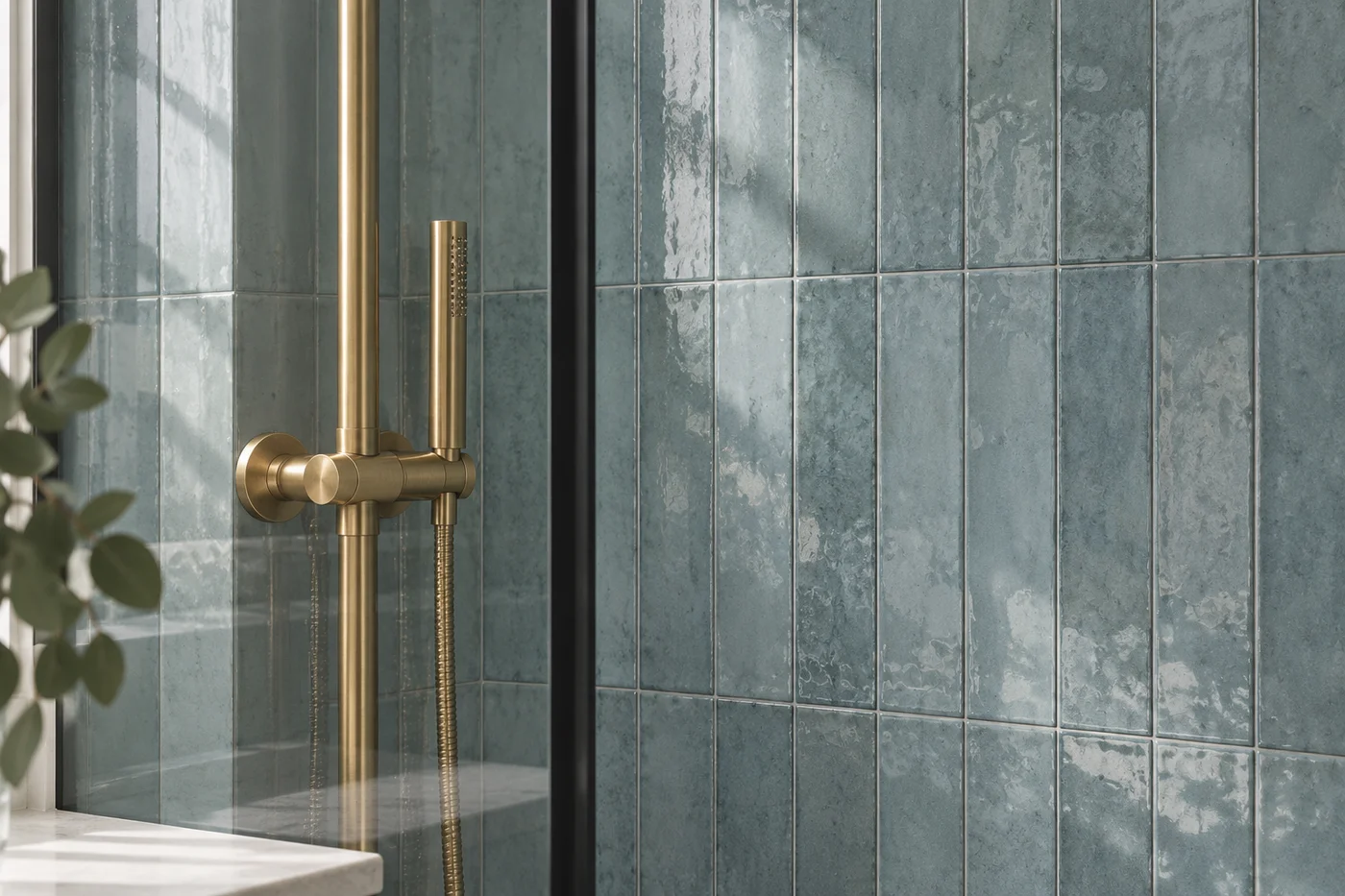
Choosing bathroom tile well means looking past the sample board. The right tile is not just the color you like in a showroom; it is the size, finish, grout joint, pattern, and transition detail that will live with your layout, your cleaning routine, and the rest of the bathroom. If you are planning a bathroom remodeling project in Hoboken, the best tile choice is usually the one that fits the room’s scale and the installer’s plan, not the one that looks best in isolation.
Start with the room, not the showroom
A small bathroom can still take a bold tile, but the proportions need to work together. Large-format tile can calm a busy room, reduce the number of grout joints, and make a wall or floor read more simply. Smaller tile can help in a shower pan, on a niche, or as an accent, but it can also create more visual movement than you want if it is used everywhere.
The main decision is not “subway tile or not.” It is whether the tile supports the room you actually have. Ask:
- Do you want the room to feel quieter or more patterned?
- Should the floor visually recede, or do you want it to stand out?
- Is the tile meant to blend into the background, or carry the design?
A useful comparison: a large, calm field tile with a restrained grout color can make a compact bath feel organized, while a mosaic-heavy look can add texture but also more visual detail to clean around.
Compare tile by maintenance, not just appearance
Bathrooms reward honest thinking about upkeep. Glossy tile may reflect more light, but it can also show water marks more readily. Textured or matte finishes can feel softer and hide some everyday marks better, but they may not read the same way under your bathroom lighting.
For shower walls, floor tile, and vanity splash areas, compare products by the care you are willing to give them. Product specs matter here because a tile that looks similar on a board may behave differently once installed. Look at:
- surface finish
- recommended use area
- size and thickness consistency
- whether the collection includes matching trim pieces
- how grout lines will look with the chosen color
If you want a bathroom that feels easy to live with, choose the finish you can picture after the room has been used for months, not just on day one.
Treat slip feel and shower use as design decisions
Floor tile selection should be tied to how the room will be used, especially inside the shower and near the entry. The product specs should be part of the conversation before anything is ordered. A tile that works beautifully on a wall may not be the right choice for a wet floor, and a style that looks elegant in a sample board may feel too busy underfoot.
Instead of treating this as a technical afterthought, make it a planning choice:
- Do you want the shower floor to visually disappear or stand out?
- Should the floor coordinate exactly with the main tile, or shift to a smaller format for visual and practical reasons?
- Do you prefer one continuous surface, or a clear change between dry floor and wet areas?
That conversation helps the installer plan cuts, slopes, transitions, and where different tile sizes make sense. It also reduces last-minute compromises when the room is already underway.
Plan grout, pattern, and transitions together
Tile rarely succeeds or fails on the tile alone. Grout color, grout joint width, layout pattern, edge conditions, and transitions to adjacent flooring all affect the finished room.
This is where many homeowners get surprised. A tile that looked clean on the board can feel busy once the grout lines are visible everywhere. A simple stacked layout can feel more contemporary than a staggered one. And if the bathroom floor meets another surface at the doorway, the transition detail matters just as much as the tile itself.
Keep the bathroom finishes in step with each other. If the tile choice is fighting the vanity, mirror, glass, or fixture finishes, the room can feel split even when each item looks fine by itself. A better approach is to review the tile beside the other materials before anything is ordered.
Use a short worksheet before you order anything
Before you commit, write down the choices that affect the whole room:
- Main goal: calmer, brighter, more patterned, or easier to maintain
- Tile location: floor, shower walls, shower floor, accent, or all of the above
- Finish: glossy, matte, or textured
- Grout approach: lighter, darker, or close to the tile color
- Layout: stacked, offset, or mixed by area
- Transition: what the tile meets at the doorway and around fixed elements
- Coordination: whether the tile supports the vanity, glass, and fixture finishes
If maintenance is part of the decision, it can help to compare this article with bathroom finishes chosen for upkeep. If your tile choice affects the shower area, what to ask about waterproofing before choosing bathroom tile is a useful next read.
If you are working on a bathroom in Hoboken or nearby, HKB can help coordinate the tile choice with the rest of the remodeling plan and the practical details that shape installation. See the broader Hoboken service area or start with contact if you want to discuss a specific project.
The most useful details to send are your bathroom size or photos, the tile styles you are considering, where the tile will go, whether the shower is changing, and any notes about maintenance concerns, transitions, or building-related planning that may affect the work.