
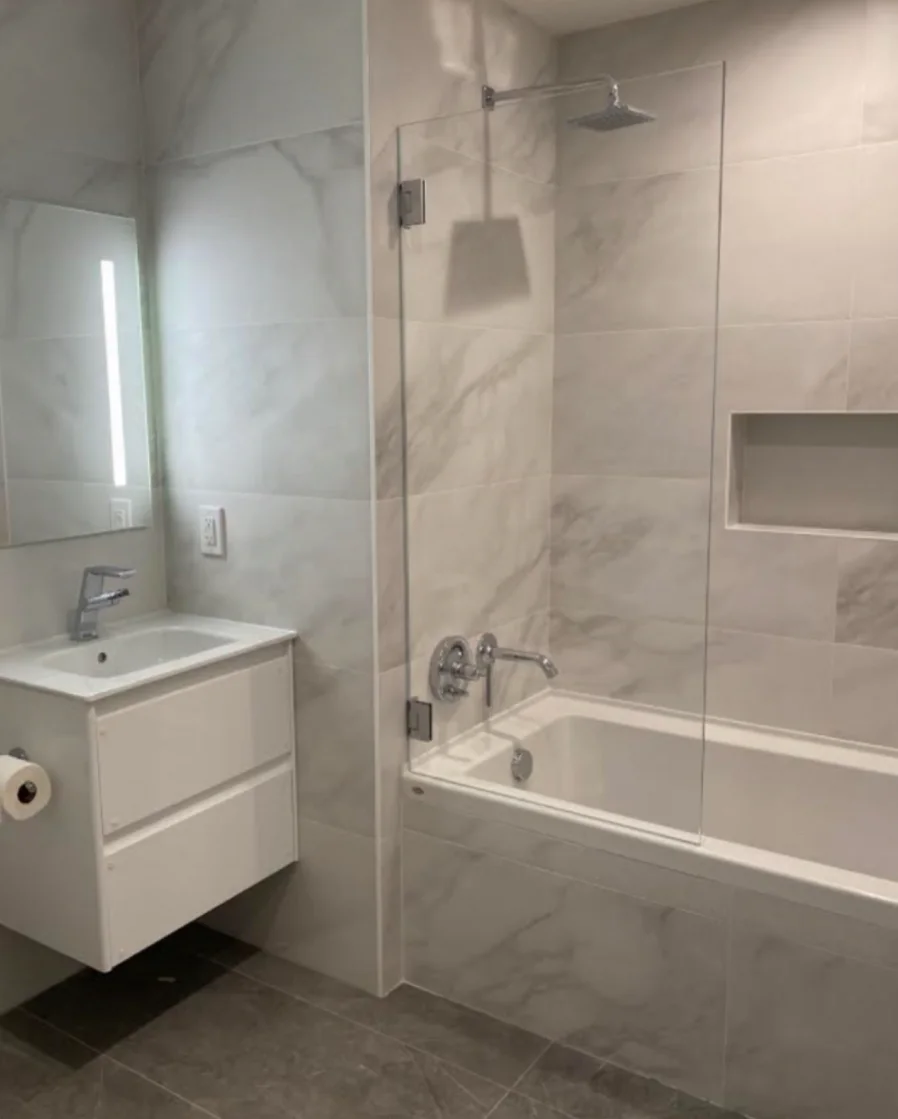
When you are choosing shower glass, start with the room as a whole: the best choice is the one that lets the door move cleanly, leaves room to clean, avoids collisions with nearby fixtures, and feels private enough for daily use. The glass should support the bathroom layout, not force the layout to work around it.
A shower enclosure looks simple on paper, but it affects how you enter, reach shelves, wipe down surfaces, and live with the room every day. That is why the glass conversation belongs in the renovation plan, alongside tile, vanity, lighting, and plumbing layout.
Start with how the door will move
The first decision is not clear versus frosted. It is how the shower opens and whether that movement fits the room.
A swinging door can feel open and easy to use, but it needs clear space to move. In a tighter bathroom, that can become awkward if the door meets a vanity, toilet, towel bar, or another fixed item.
A sliding panel avoids swing clearance, which can make sense where floor space is limited. The tradeoff is that one side of the opening remains overlapped, so access and cleaning feel different from a hinged door.
A fixed panel with an open entry can make a shower feel lighter and less crowded. It can also reduce hardware and moving parts, but only if the opening still feels comfortable for daily use.
If you are comparing glass as part of a larger bath project, start with bathroom remodeling and the local Hoboken service area.
Compare cleaning access, not just appearance
Glass is easiest to live with when you can reach the spots that collect water and soap film. That means thinking about edges, overlaps, hardware, and the space around the entry before you choose the style.
A frameless look can feel lighter and simpler, but the room still needs enough room to wipe the glass and clean around the hardware. More framing may create more visual definition, while also changing where buildup can collect.
Ask yourself:
- Can you clean the inside corner without stretching around a fixed fixture?
- Will the door leave enough entry width for daily use and cleaning?
- Are there ledges, niches, or benches that change how splash travels?
- Will nearby tile joints, trim, or vanity edges make maintenance harder?
If maintenance matters to you, the right question is not “Which glass looks best?” It is “Which glass matches how this bathroom will actually be used?” For broader planning around finish choices and room flow, the related guide on bathroom tile selection can help you compare surface choices as one room instead of separate purchases.
Measure from finished surfaces, not rough openings
Shower glass should be discussed after the wall finishes, tile build-up, and shower edges are part of the plan. The room that exists after renovation is the room the glass has to serve.
That matters because the enclosure must align with completed surfaces, not the unfinished wall line. A layout that seems generous before tile can feel tight after the room is fully built out. The opposite can happen too: a plan that looks too small on paper may work once the finished surfaces are in place.
This is one reason glass belongs in the same conversation as tile, curb or threshold decisions, and fixture placement. If a bench, niche, or door swing is already planned, the glass should reflect those choices instead of competing with them.
A useful rule: confirm glass decisions after the design has settled, but before the room is too far along for adjustment.
Balance privacy with openness
Shower glass changes how private the room feels as much as how open it looks. Clear glass can make a smaller bathroom feel larger, but it also puts more of the shower in view from the rest of the room.
That may be exactly right in one home and a bad fit in another. Consider how the bathroom is used:
- Does the shower sit near the entry?
- Is the toilet visible from the door?
- Do two people use the room at once?
- Do you want the shower to read as a feature or recede quietly?
Tinted, textured, or partially obscured glass can offer more privacy without making the room feel closed in. The right choice depends on the sightlines in the completed bathroom, not on the sample alone.
Use a short worksheet before you order
Before you commit to shower glass, walk through these decisions:
- How should the shower open: swing, slide, or fixed entry?
- What nearby item could interfere with door movement?
- How will you clean the glass and the hardware edges?
- Which finished surfaces determine the final opening?
- How much privacy does the room need in daily use?
- Does the glass support the rest of the bathroom design, or fight it?
If you are early in planning, send a clear inquiry through contact with your bathroom scope, ZIP code, project details, timing, and your contact preferences. If the shower glass is part of a larger bath or home project, that context helps HKB evaluate the room as a whole and coordinate the right next step.
For the most useful first conversation, include: the current bathroom size and use, whether you want a swing, slide, or fixed panel, what fixtures sit near the shower, any privacy concerns, and whether the glass is part of a broader renovation sequence.