
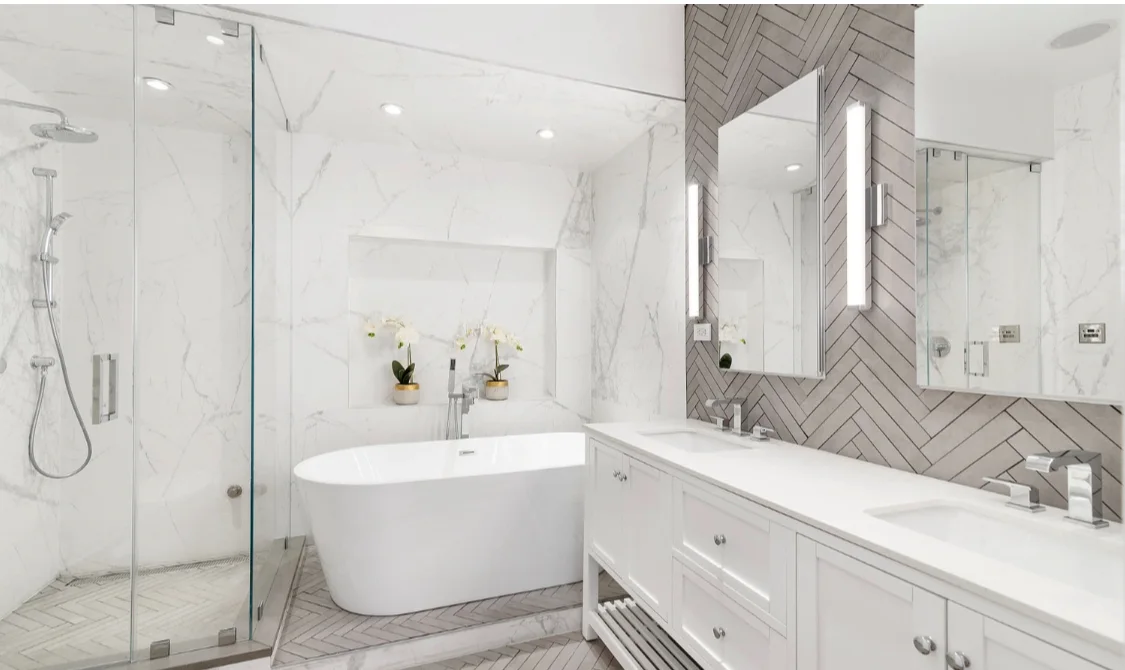
If the bathroom serves children, guests, or occasional soaking, keeping a tub can still make sense. If the room feels crowded and the shower is the fixture you use every day, a larger shower may be the better long-term choice. The right answer usually comes from household routines, storage needs, and what the room can comfortably support—not from a one-size-fits-all rule.
Start with how the bathroom is actually used
Before choosing fixtures, think about who uses the room and when.
- Is this the primary bath, a shared family bath, or a guest bath?
- Do you bathe children here, or is a tub rarely used?
- Do you need a quicker daily shower with easier entry and more elbow room?
- Would losing the tub create a problem for guests or future household needs?
A tub is often worth keeping when it gets regular use or when it helps the room serve more than one purpose. A larger shower can be the better fit when the tub sits unused and makes the room feel tight or awkward to use.
Compare the tradeoff: one feature that does two jobs versus one that does one job better
A bathtub gives you flexibility. It supports bathing, can serve guest needs, and may help a bathroom feel complete in a way some homeowners prefer. But it also uses a large footprint.
A larger shower usually gives you a different kind of value: more usable floor area inside the bathing zone, easier movement, and a less cramped daily experience. In a small or busy bathroom, that can matter more than having a tub that hardly gets used.
Think of it this way: a tub is broader in purpose, while a larger shower is often stronger in everyday convenience. The better choice depends on which one your household will use most.
Plan for storage and enclosure at the same time
This decision should not be made in isolation. If you remove the tub, the shower opening, glass, and storage all become part of the same planning conversation. If you keep the tub, the wall layout, surround, and storage around it still need to work together.
Good questions to settle early:
- Where will towels and everyday toiletries live?
- Will a larger shower make room for a niche, ledge, or bench?
- If the shower gets bigger, will the glass enclosure make the room feel open or crowded?
- If the tub stays, does the room still have enough comfortable circulation?
In many bathrooms, the real issue is not “tub or shower” but whether the room has enough practical storage and breathing room after the choice is made.
Think about who uses the room beyond your household
A bathroom often needs to work for guests, not just the daily users. If this is a hall bath or a shared bathroom in a Hoboken home or condo, keeping a tub may make sense because it gives the room broader usefulness. If the bathroom is tied closely to one adult household and the tub has become dead space, a larger shower may be the more sensible direction.
Local projects in Hoboken also need to account for the rest of the home: tighter room sizes, condo or co-op building requirements when they apply, and coordination with permits or inspections when the scope calls for them. HKB can help plan the renovation around those project questions so the bathroom design matches the actual job, not just the finish selections. For service-area context, see Hoboken bathroom remodeling and the broader bathroom remodeling page.
Make the decision with a project brief, not a guess
Before you ask for a proposal, write down the facts that affect the layout decision. That gives the contractor a clearer starting point and helps avoid back-and-forth later.
Use this quick worksheet:
- Current room: tub/shower combo, separate tub, or shower-only
- Daily use: who uses the room and how often
- Guest use: whether a tub is helpful for visitors or children
- Storage needs: what is missing now
- Shower preference: larger open shower, enclosed shower, or tub retained
- Change tolerance: whether you are open to changing the room layout or prefer a simpler swap
- Building context: house, condo, or co-op, and whether building requirements may affect the work
If you are also weighing fixture layout, this related guide may help: planning a bathroom layout before choosing tile and fixtures.
What to send when you contact HKB
If you want HKB to assess whether a tub should stay or go, send the details that shape the room’s use:
- Your ZIP code and neighborhood
- Whether this is the primary, family, or guest bathroom
- What you dislike about the room now
- How often the tub is actually used
- Whether you need more shower space, more storage, or easier access
- Whether you live in a house, condo, or co-op
- Any building requirements you already know about
- Your preferred timing and best contact method
Use the contact form to share the scope, ZIP, project details, timing, and contact preferences. That gives Tony enough context to tell whether keeping the tub or creating a larger shower is the better direction for your bathroom.
Share your renovation plans with HKB, including your ZIP code, the rooms involved and the decisions you want help evaluating.
Explore HKB’s bathroom renovation service to discuss the wider project scope.