
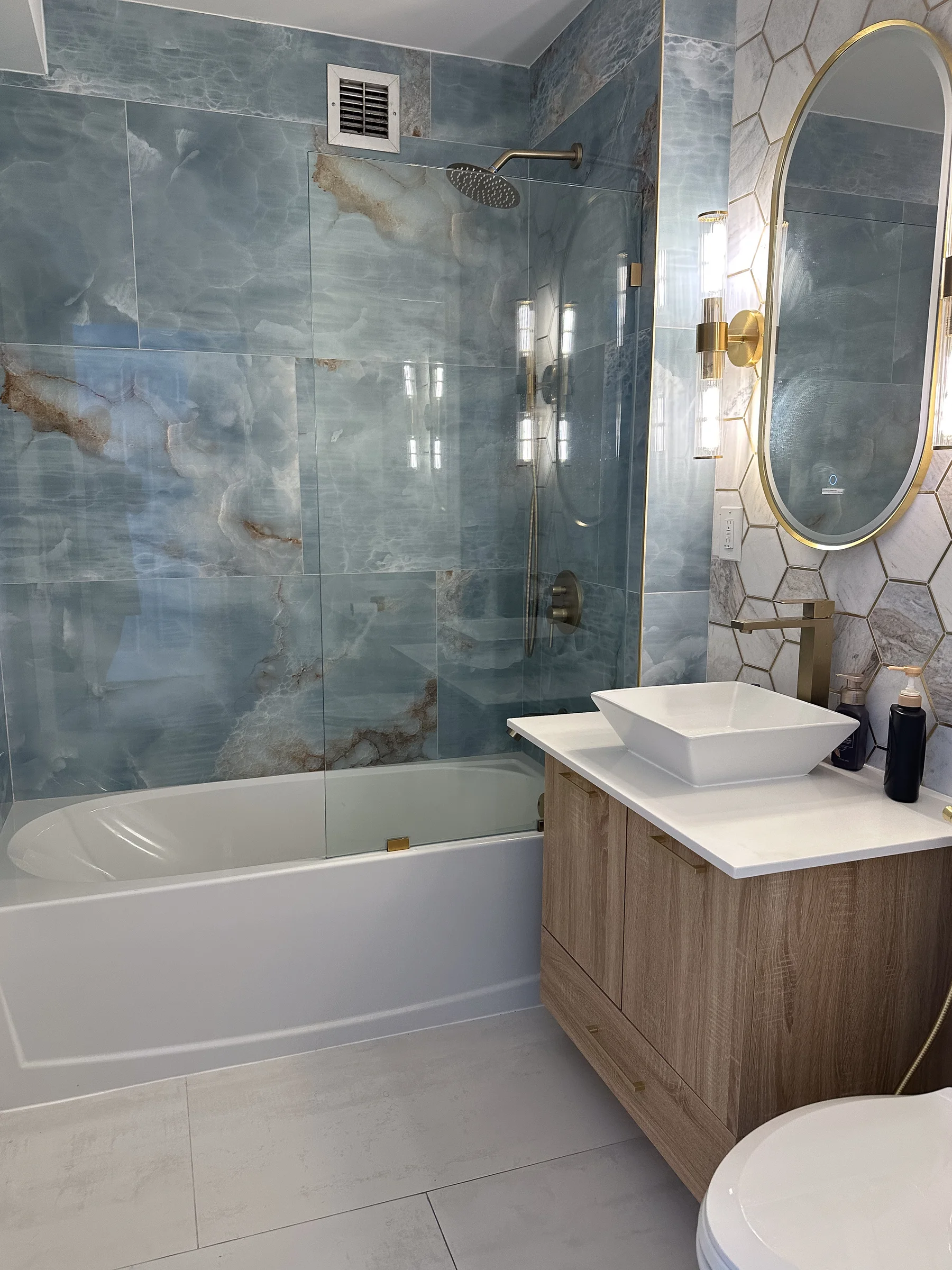
Before you choose a vanity, decide what problem it needs to solve. In most bathrooms, the right vanity is not just about style or size; it is about what you need to store, how the plumbing fits, how much counter you actually use, and whether doors and drawers will work in the room without fighting the layout.
Start with what belongs in the vanity
A vanity that looks generous on paper can still feel too small if it has to hold the wrong things. Start by sorting the items you want close at hand.
Think in three groups:
- Daily-use items: toothpaste, face wash, contact lens supplies, hair tools, shaving items, and medication you want out of sight but easy to reach
- Shared items: backup toiletries, extra soap, tissue, cleaning supplies, first-aid items
- Overflow items: anything that could move to a linen closet, hallway cabinet, or other storage outside the bath
This is the first design decision: should the vanity hold only daily items, or should it absorb storage that belongs somewhere else? If you ask the vanity to do everything, the cabinet size and drawer count usually start driving the whole room.
Make vanity storage part of your complete bathroom renovation, so the cabinetry, fixtures and room layout are considered together.
Drawer storage or doors: what you reach for matters
A useful comparison is drawers versus doors.
Drawers usually work best when you want easy access to smaller items. You can see more of what is inside, and you are less likely to bury things in the back. They are often a strong fit for busy family bathrooms and primary baths where daily routines are repetitive.
Doors can be useful when you need to store taller items, cleaning products, or bins that do not organize well in shallow drawers. They can also make sense when plumbing leaves an awkward center section that would waste drawer space.
Many good vanity layouts use both. The key decision is not which option is better in theory, but what you want easy access to every day. If you find yourself crouching and digging, drawers may matter more than extra cabinet volume. If you need one tall storage zone for bulk items, doors may be the practical choice.
Plan around plumbing before you fall in love with the cabinet
The vanity has to work with the sink, drain, shutoffs, and cabinet interior together. That means the plumbing arrangement is part of the storage decision, not something to think about later.
Questions to resolve early:
- Will the sink be centered or offset?
- Is there enough room in the cabinet for the plumbing without blocking usable storage?
- Would one sink leave more useful storage than two sinks in the same width?
- Do you need a wider drawer stack, a single sink base, or a cabinet with a shaped interior?
This is where a remodel conversation is more useful than shopping for a piece in isolation. A vanity that looks ideal in a catalog may lose most of its storage once plumbing is accounted for. Bring the room measurements, current fixture positions, and your must-store list into the discussion so the cabinet choice matches the project, not just the product.
Counter space, mirror use, and cleanup all affect the choice
Counter space is not only about having room for things. It also changes how the room feels when two people use it, where water lands, and how much clutter stays visible.
If you keep many items on the counter, a vanity with more surface area may reduce daily frustration even if it sacrifices some storage below. If you prefer a clear top, a more storage-focused cabinet can keep the room calmer.
Cleaning matters too. Cabinet fronts with fewer interruptions may be easier to wipe around. Open toe-kicks or narrow gaps can make a room feel lighter, while floor-standing cabinets can offer a more traditional look and sometimes a more straightforward storage footprint. The right answer depends on how the room is used, not only on appearance.
Wall-hung or floor-standing: choose based on the room, not the trend
Wall-hung vanities can make a bathroom feel less visually heavy and can leave open floor area beneath the cabinet. That can be helpful in a compact room or when you want a lighter look. But wall-hung does not automatically mean more storage, and the cabinet interior still needs to work for the items you plan to keep.
Floor-standing vanities can provide a stronger storage base and may better suit bathrooms where the cabinet needs to carry more of the room’s storage load. They can also help when you want a more substantial furniture-like presence.
The real question is simple: do you need the room to feel more open, or do you need the cabinet to carry more of the storage burden? That answer usually leads to the right style.
Use this quick vanity worksheet before you order
Bring these answers to your renovation conversation:
- What must stay in the vanity every day?
- What can move elsewhere in the home?
- Do you want more drawers, more doors, or both?
- Is the plumbing likely to limit storage in the center of the cabinet?
- Do you want a wider counter or the largest possible storage cabinet?
- Would a wall-hung or floor-standing vanity fit the room better?
- Are there any door swings or adjacent fixtures that the vanity must not block?
If you are planning a bathroom remodel in Hoboken or nearby North Jersey, send that information through project inquiry form along with your ZIP code, project details, timing, and contact preferences. If you want to compare this topic with other early bathroom choices, bathroom fixture coordination is a useful related read.
The more clearly you define storage needs before ordering, the easier it is to choose a vanity that fits the room, supports daily routines, and works with the rest of the renovation.